|
Eager Space | Videos by Alpha | Videos by Date | All Video Text | Support | Community | About |
|---|
Welcome to Eager Space
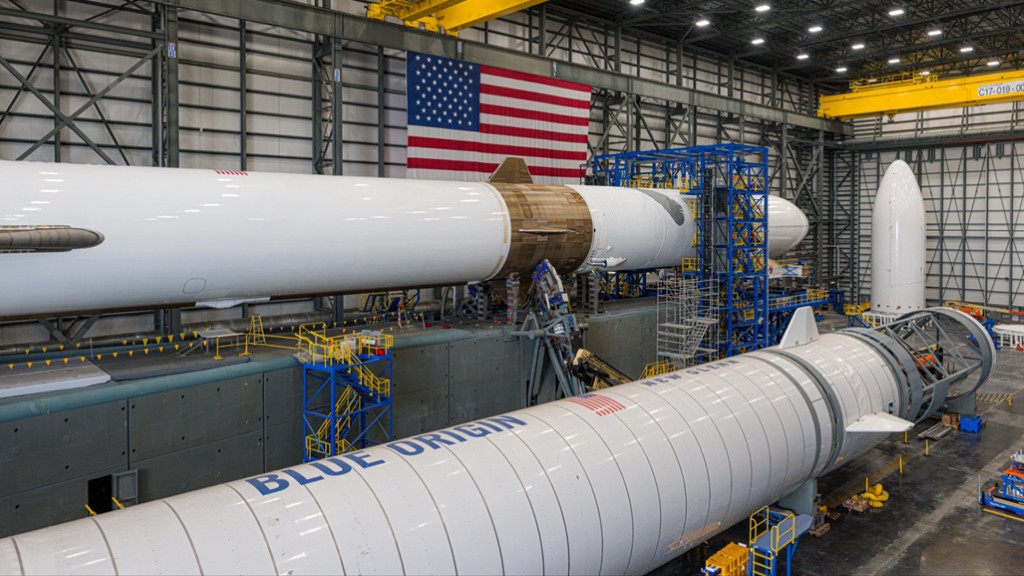
With New Glenn's successful second flight - including a landing for the first stage booster - I've been getting some questions about its future prospects.
One question was "Can you discuss the economics of New Glenn?", and believe me when I tell you that you really do not want that video - I was bored after writing 10 slides and I *like* economic discussions.
The second was "Will New Glenn be Competitive?", and it turns out that's a far more interesting question. My answer is complex and different than what you might expect if you've seen my previous videos on Blue Origin or New Glenn...
Welcome to Eager Space
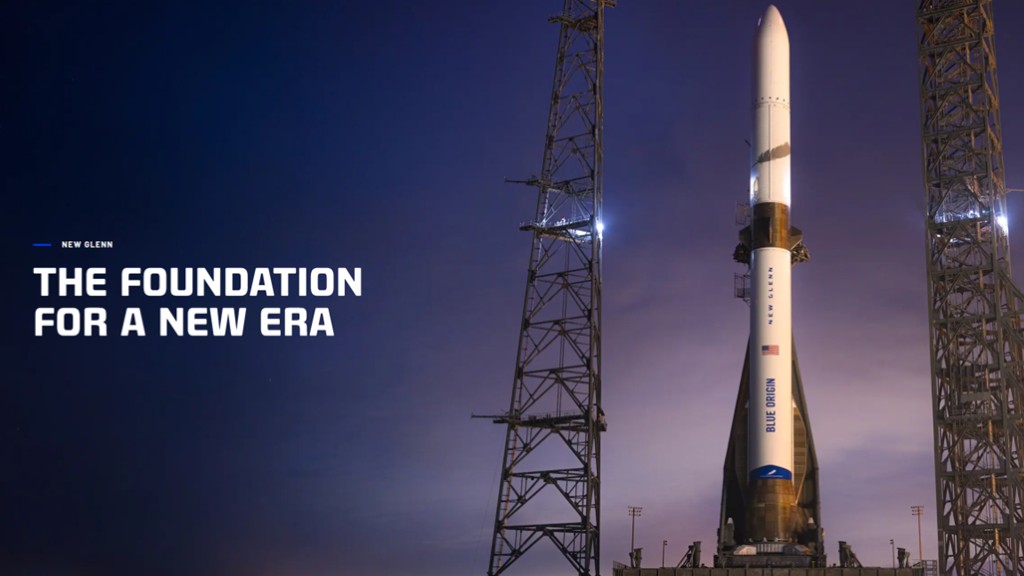
With New Glenn's successful second flight - including a landing for the first stage booster - I've been getting some questions about its future prospects.
One question was "Can you discuss the economics of New Glenn?", and believe me when I tell you that you really do not want that video - I was bored after writing 10 slides and I *like* economic discussions.
The second was "Will New Glenn be Competitive?", and it turns out that's a far more interesting question. My answer is complex and different than what you might expect if you've seen my previous videos on Blue Origin or New Glenn...
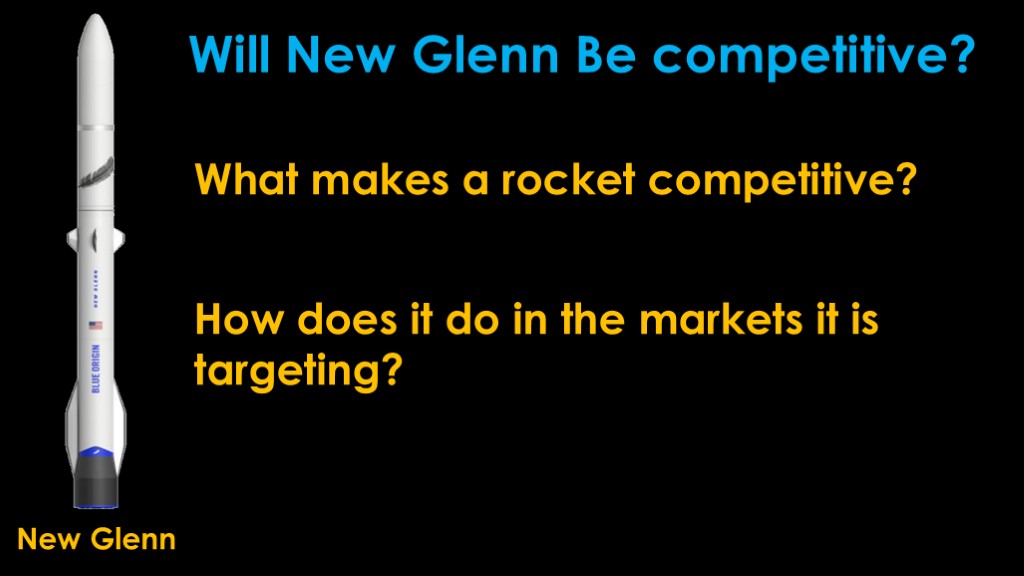
Will New Glenn be competitive?
To answer that question, we first need to understand what makes a rocket competitive and then we'll need to understand what the competitive environment is in the markets it might compete in.
To answer the first question, we need to start with launch costs...
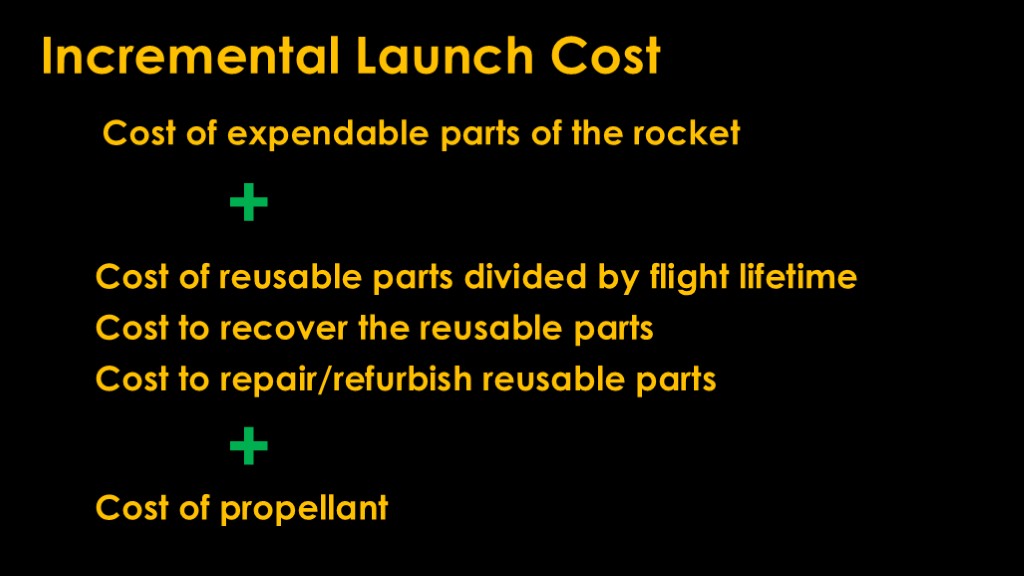
The first part is what I call incremental launch cost - how much it would cost for you to launch one more rocket in a year.
That includes the cost of the expendable parts of the rocket, the parts that you throw away.
If you have a rocket with reusable parts, it's the cost of the reusable part divided by the flight lifetime - the number of flights you expect it to last. Add into that the cost to recover the reusable parts and the cost to repair or refurbish them.
And finally, there are the small costs such as propellant.
All of these costs are high on early flights and generally are reduced as more is learned about a given rocket and the operations are optimized.

Rocket Lab CEO Peter Beck has noted the transition process
(read)
And those skilled technicians can build the 50th rocket much more quickly and cheaply than the first ones.
It's interesting to note that Beck's benchmark is 50 rockets. Rocket Lab's electron is one of few rockets that has launched more than 50 times, and took 7 years for them to hit that benchmark. The very prolific Atlas V took 12 years to get to 50 launches.
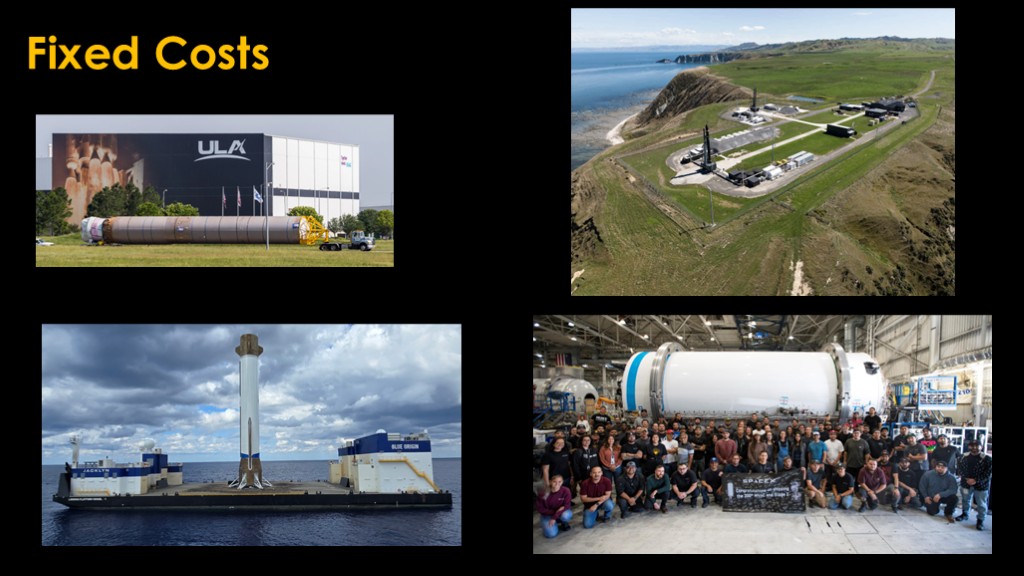
The next category of costs is fixed costs.
Rocket companies have rent and maintenance costs on factories, launch complexes, and recovery ships. They have salaries and benefits for the thousands of employees that they employ. And they have mundane expenses like insurance premiums, property taxes, business taxes, utility payments, etc.
The majority of these are fixed costs - you have to pay them if you launch 1 time in a year or if you launch 50 times in a year.
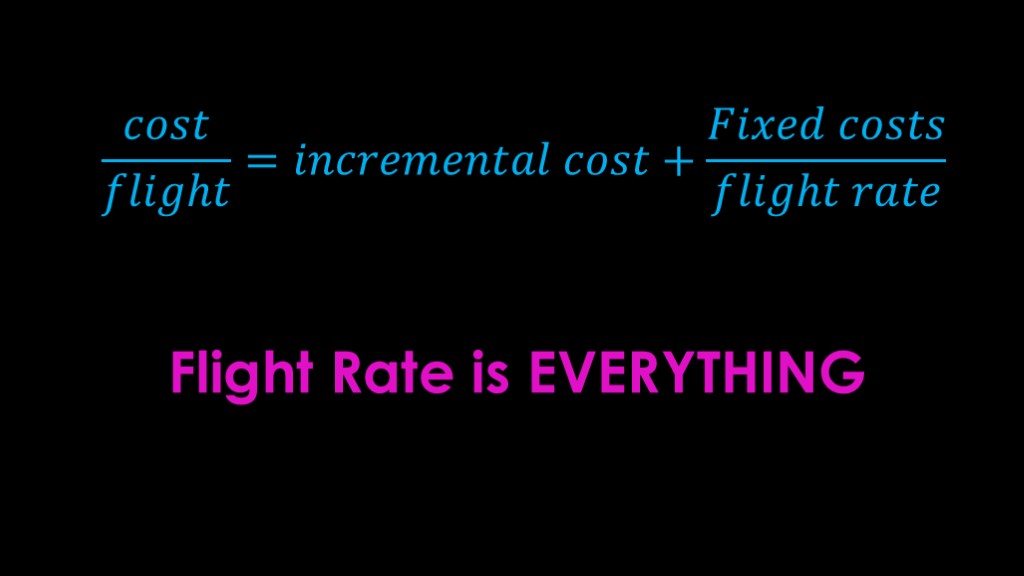
The cost per flight is therefore the incremental cost per flight + the fixed costs divided by the flight rate per year.
As you fly more, your fixed costs per flight go down and you learn more about your rocket so the incremental costs go down as well. And the companies that fly a lot have known schedules and lower risk and insurance rates.
In other words, flight rate is *everything* for a launch company who wants to be competitive.
That is why pretty much everybody has unrealistic projections for how often their rocket is going to fly the first few years.
A final factor is company culture.
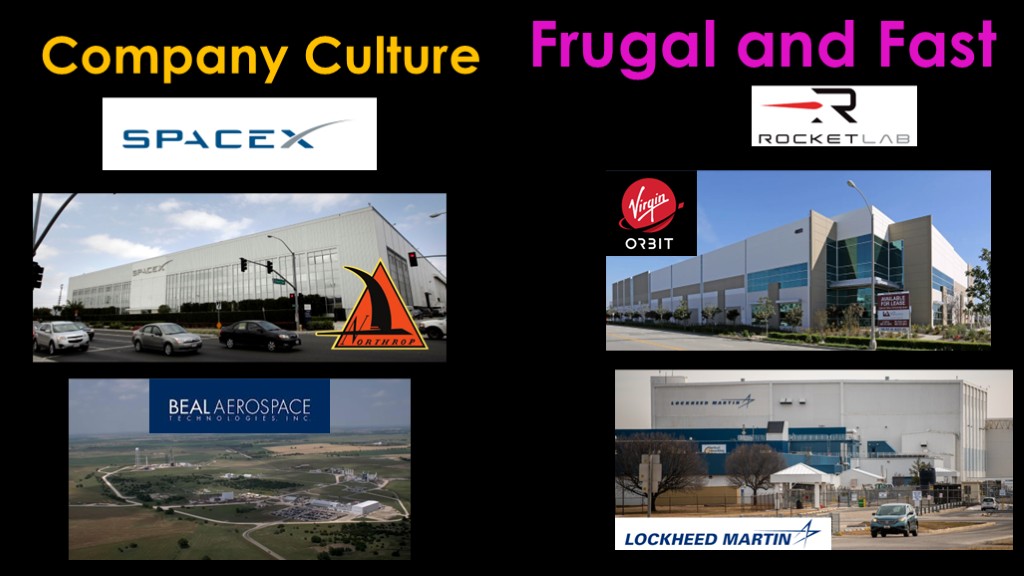
If you look at the history of both SpaceX and Rocket Lab, you'll find stories of them building their own parts cheaply rather than buying expensive parts from existing aerospace suppliers and being creative to build factories and launch pads quickly and cheaply.
SpaceX took over a defunct factory that was formally owned by Northrop and their McGregor test site was purchased from Beal Aerospace.
Rocket lab got the entire Virgin Orbit manufacturing complex including machinery and equipment at a bankruptcy auction for only $16 million, and they bought a shutdown Lockheed Martin plant in Maryland to use for Neutron flights.
Being a startup with limited capital means that the employees need to work fast and be innovative because if they don't, they'll run out of money, and everybody will be out of a job, including the founder. I call that "alignment of incentives".
I would call companies like SpaceX and Rocket Lab "frugal and fast"
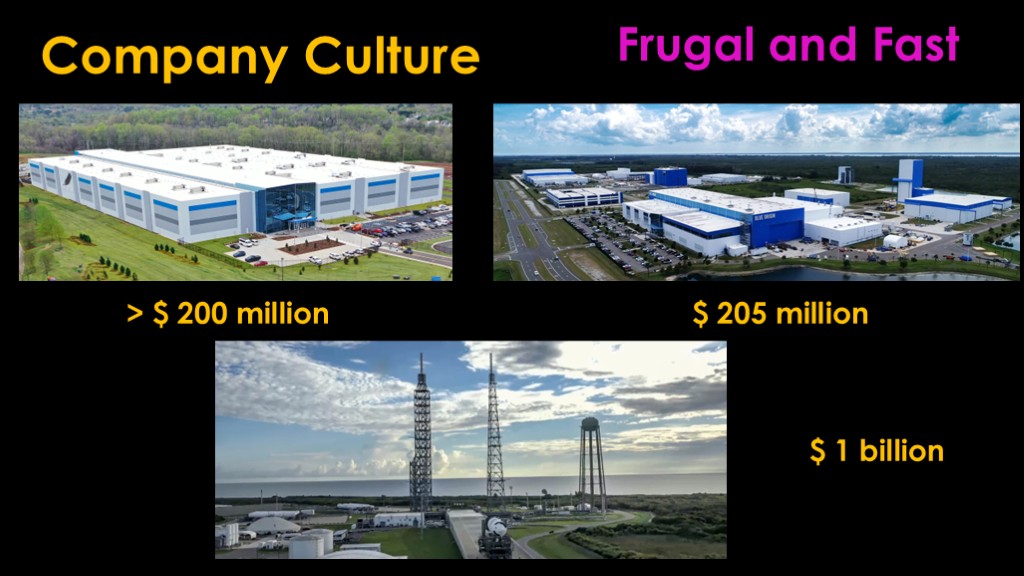
Fiscal efficiency and speed is where I've complained about Blue Origin the most.
They have an engine factory that cost more than $200 million, a rocket factory that cost $ 205 million and has since expanded, and a launch pad reported to cost $1 billion.
They're all very nice buildings but my analysis is that a company that spends the way Blue does likely doesn't have sufficient internal fiscal controls, and that does not bode well for being competitive. Building excess capacity up front is rarely the right move.
I therefore would not apply "frugal and fast" to Blue, and that's a significant competitive disadvantage.
And before you complain, I feel similarly about Starbase - you can waste a lot of money building facilities only to find out that they aren't quite what you need later on.

Keeping all that in mind, let's talk about markets where New Glenn might compete...
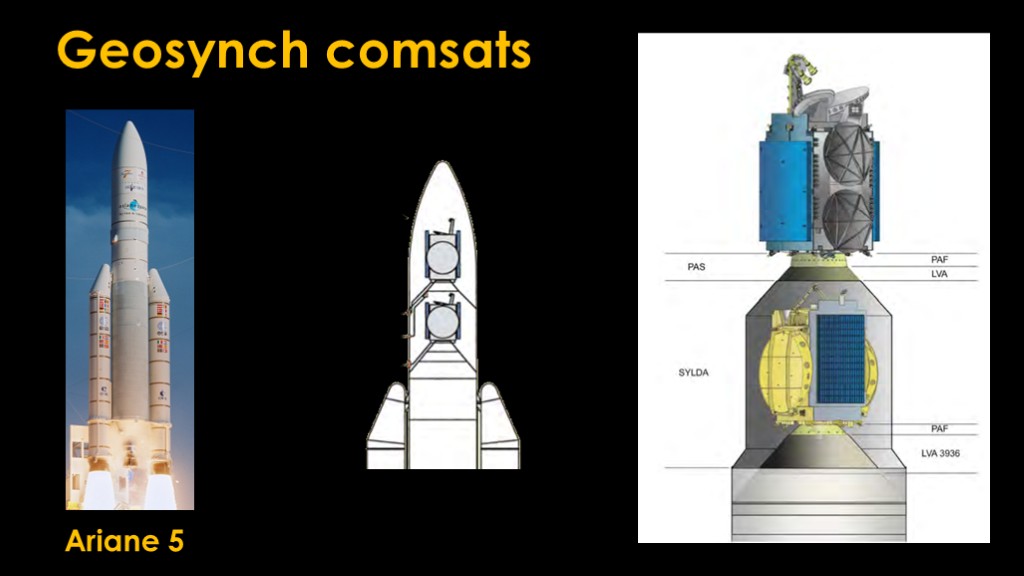
Back when New Glenn was just an idea, the dominant commercial launcher in the world was Ariane 5.
The Ariane folks had a very interesting idea.
Since the bulk of the commercial market was launching communications satellites to a geosynchronous transfer orbit, if you built a larger rocket, you could carry two payloads at the same time. The lower satellite berth was a bit smaller and cost a bit less, and the upper satellite berth was a bit bigger and cost a bit more.
This was a huge hit and Ariane 5 launched over 170 payloads.
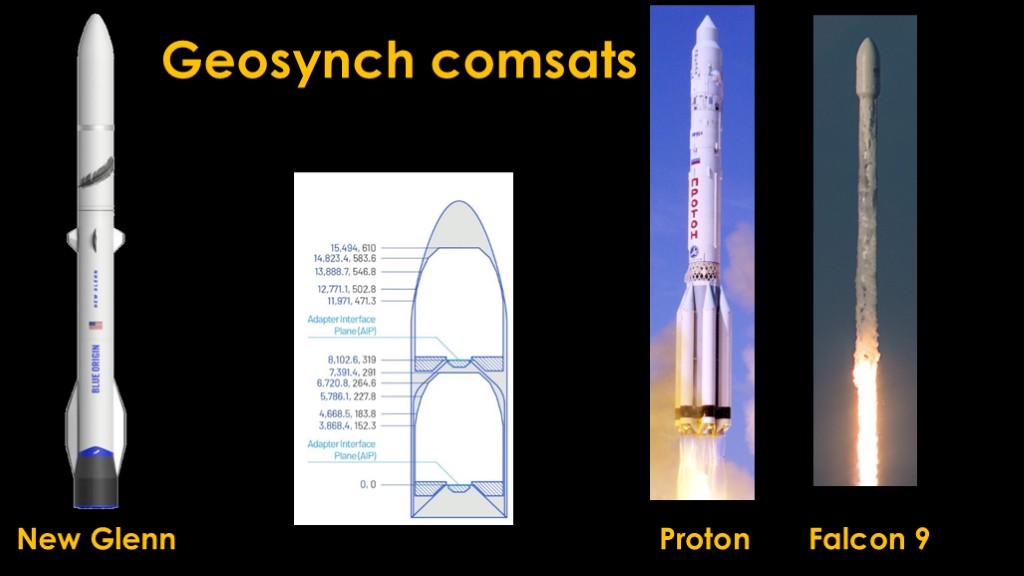
The original plan for New Glenn was to "out Ariane Ariane" - they would launch two payloads of equal size, in what they call a "dual manifest" configuration.
This was a reasonable plan - it would allow them to compete with Ariane 5 in a market that was growing and one where Arianespace - because of being a multi-country multi-government beast - was having a hard time ramping up to meet demand.
New Glenn wasn't flying during that time, and the market would end up being addressed by Proton and then Falcon 9.
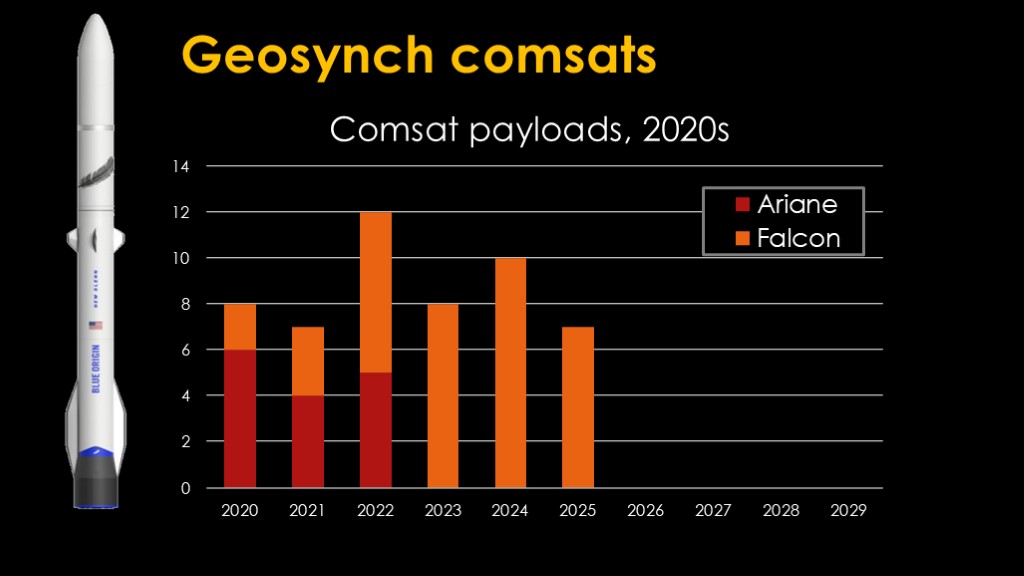
But Comsats aren't the cool kids any more - the market is still trying to figure out what their role is going to be with the rise of constellations like Starlink.
The full market for comsat launches in 2025 was 7, all of them done by Falcon 9.
The public manifests for 2026 say 3 for Falcon 9, 4 for Ariane 6.
The low demand is especially problematic for the dual-launch approach as that needs customers waiting - or willing to wait - to get two payloads per launch, and if you only get one, your costs per payload double.
I don't think New Glenn is going to be able to play in the market that currently exists here.
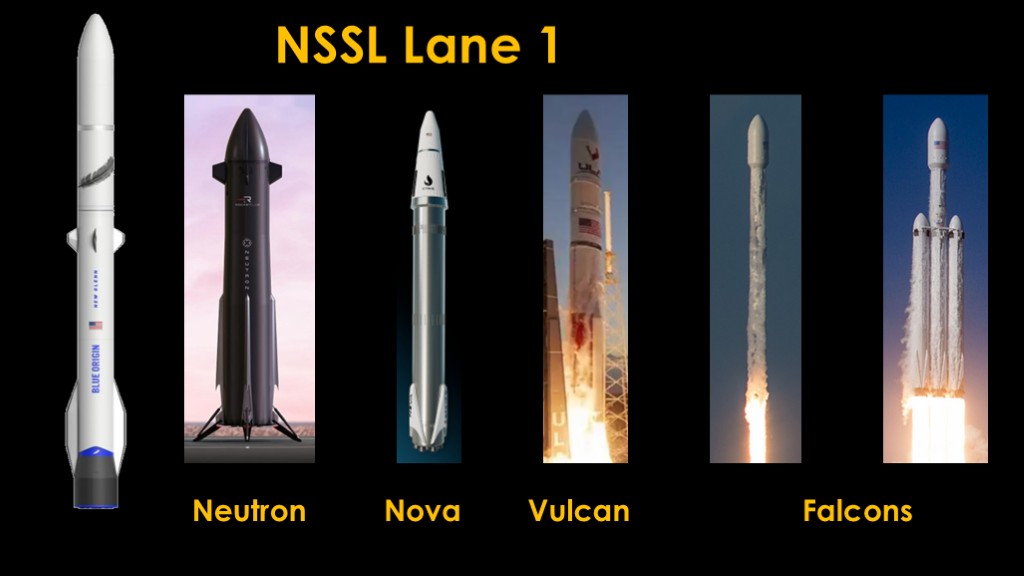
The second market is National security space launch lane 1, which consists of Space Force payloads that are destined for low or medium earth orbit. You can think of these as "commodity military payloads"...
New Glenn can play in this space, but unfortunately, so can pretty much everybody else.
Neutron, Nova, Vulcan, and both Falcons are going to be going after these missions, and it's going to be very competitive.
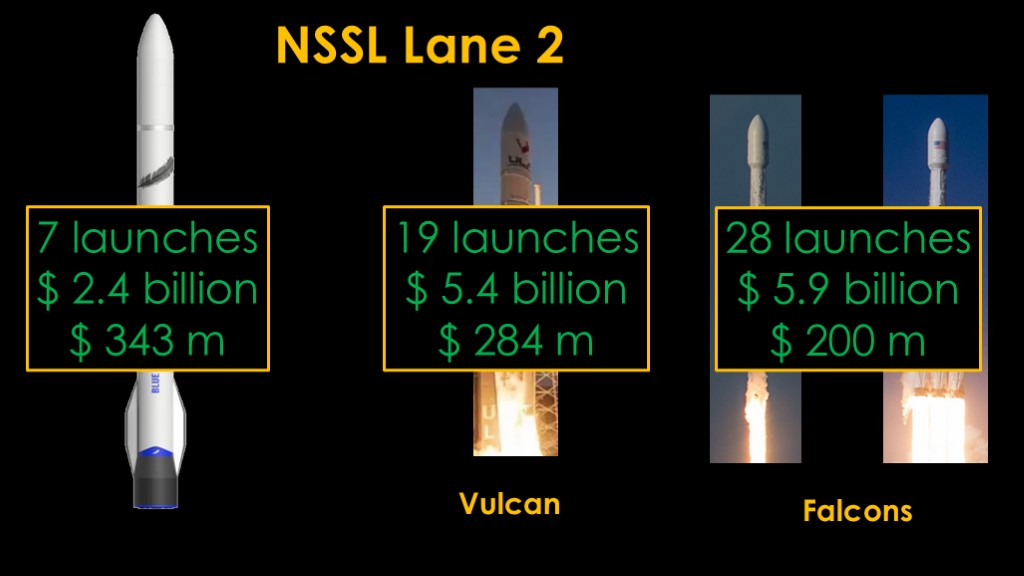
NSSL Lane 2 - what I'll call "NSSL Classic" - is a nicer market in some respects because it has significant barriers to entry. You need to go through a certification procedure and you need to be able to fly some really hard orbits, include 6.6 tons direct to geostationary orbit.
Both Vulcan and Falcon Heavy require specially modified second stages to be able to do that.
If you get certified and win a contract, then you are in for a bit of a treat - you get paid what you bid regardless of what the other companies bid. This was historically very lucrative for ULA when they had a monopoly - these days it's very lucrative for SpaceX because their flight rate is so high.
The phase 3 lane 2 awards have already been made.
SpaceX ended up with 28 launches for $5.9 billion, or $200 million per launch. ULA ended up with 19 launches for $5.4 billion, or $284 million per launch.
Originally there were only going to be two winners, but - perhaps due to lobbying, perhaps due to continued delays of Vulcan - Blue Origin ended up with 7 launches for $2.4 billion or $ 343 million per flight. This award requires New Glenn to achieve certification, and according to Space policy online, 2 of those launches will be the difficult direct to geo payloads.
The current two-stage New Glenn is probably not capable of performing that mission. More about that later...
NSSL Lane 2 is a good opportunity for New Glenn and there's a chance they could win a bigger part of phase 4, or maybe phase 4 has 3 somewhat equal providers. If they can get New Glenn certified.
And the number of launches are a bit up in the air - golden dome could mean even more launches, but the cancellation could mean a lot fewer. And the space force could choose to move even more launches to lane 1.
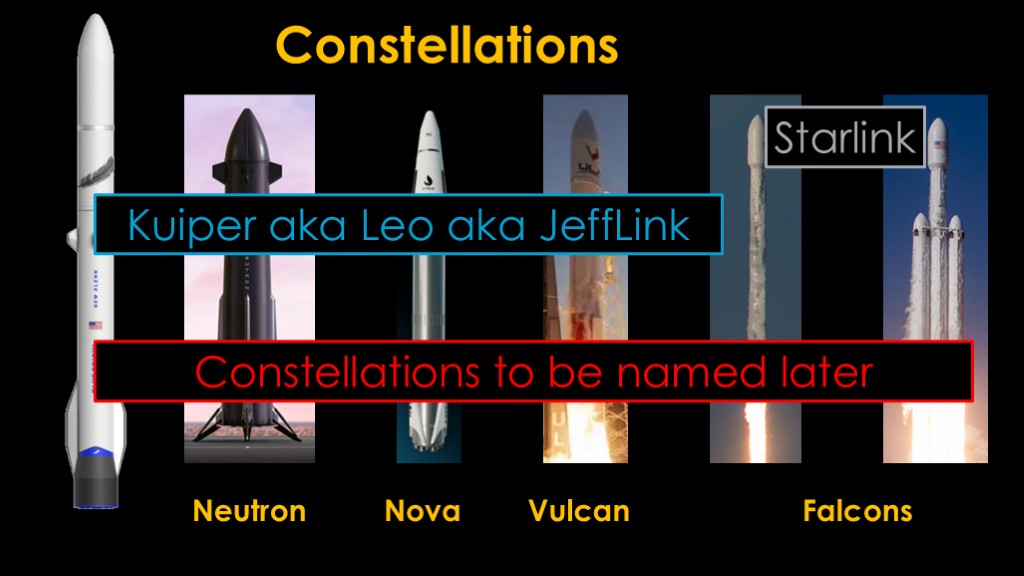
The constellation market is going to be a bit like the NSSL lane 1 market.
Starlink is obviously going to fly on SpaceX rockets.
The constellation previously known as Kuiper that is now know as Leo and that I sometimes call "JeffLink" was originally an "anybody but SpaceX" market, with contracts for New Glenn, Vulcan, Atlas V, and Ariane 6. Amazon then bought 3 launches on Falcon 9 in response to a shareholder lawsuit.
There are probably one or more constellations to be named later.
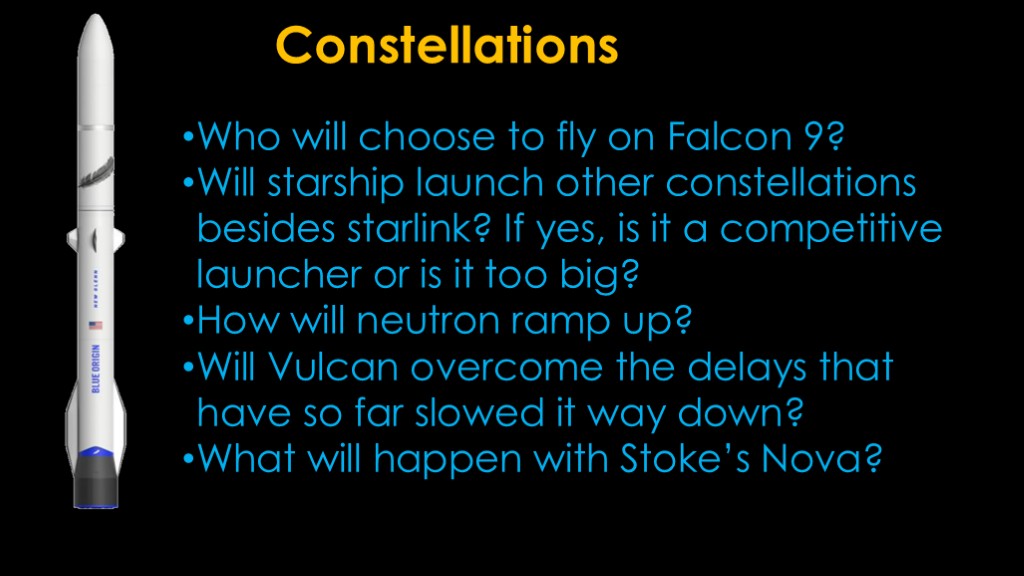
This will likely be a big market but there are right now a lot of unknowns:
Who will choose to fly on Falcon 9?
Will starship launch other constellations besides starlink? If yes, is it a competitive launcher or is it too big?
How will neutron ramp up?
Will Vulcan overcome the delays that have so far slowed it way down?
What will happen with Stoke's Nova?
I do expect this will be a dog-eat-dog market, but Falcon 9 and Atlas V are the only vehicles launching right now.
How would I describe the New Glenn's market opportunities?
"It's an expensive rocket from a company that really likes to spend money on shiny new factories and the size of it will make it hard to get to a decent launch rate".
This one is pretty easy to analyze.
With the exception of the NSSL lane 2 market, this rocket is not likely to be competitive in terms of cost.
Which makes a somewhat depressing video.

But then I did a bit of thinking....
Going up against a strong competitor is generally a poor business strategy. What you want to do is go to an area where you competitors can't or won't try to follow...
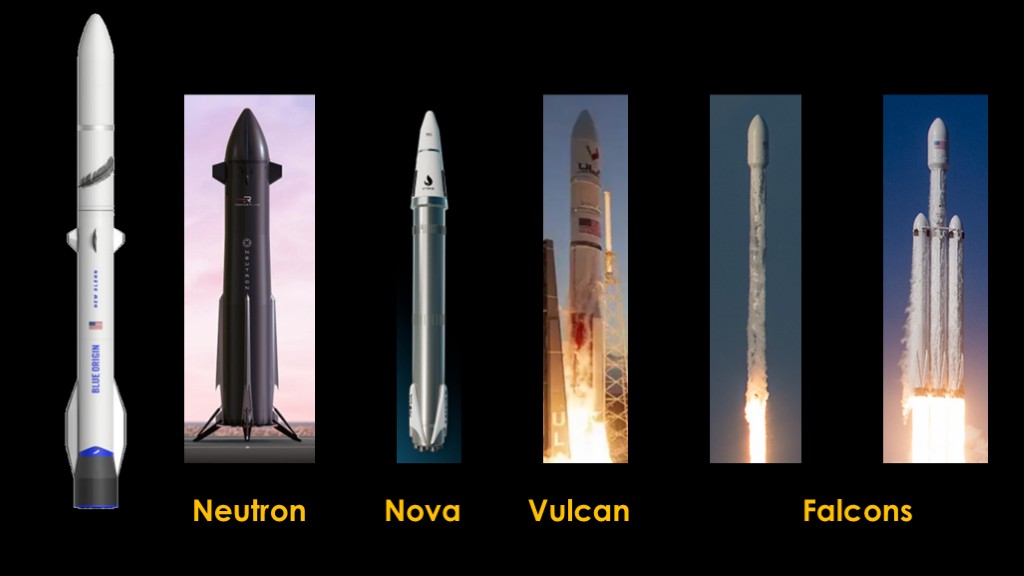
Looking at these rockets, New Glenn is in a very difficult position.
At the low/medium end, you have a bunch of competition, and you are a big rocket. It's going to be really difficult to compete with the first 4 rockets - with the *possible* exception of constellation launches, but even then it is going to be difficult.
Let's eliminate the smaller rockets...
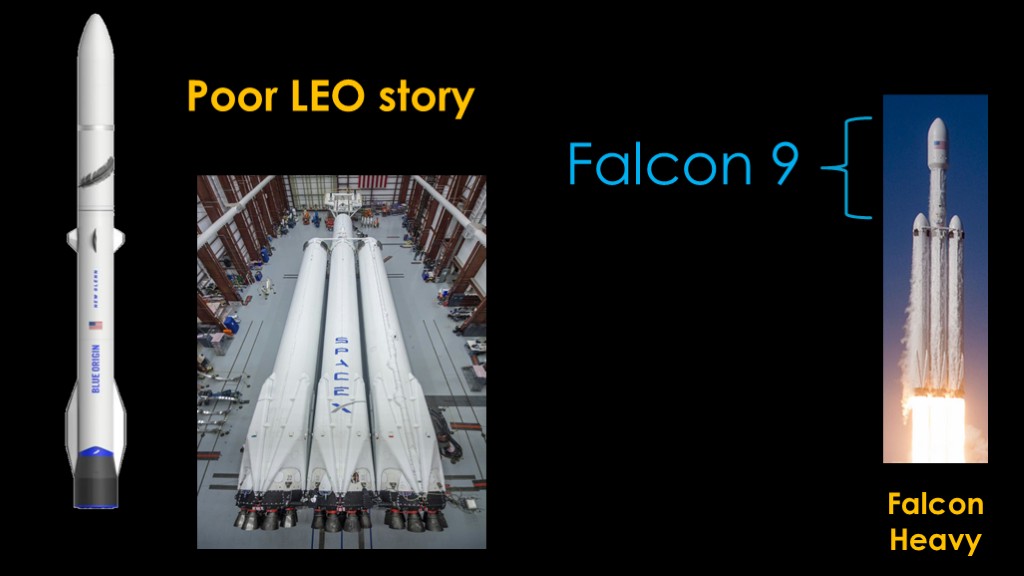
That leaves us with Falcon Heavy.
Falcon Heavy is a more capable rocket than New Glenn - it can do the direct to GEO missions that New Glenn probably cannot do.
But Falcon Heavy has a few issues.
The first is that it has a poor LEO story.
The biggest issue is that the top part is a Falcon 9. Falcon Heavy has a theoretical payload of around 50 tons to LEO if you reuse all three boosters, but the payload adapter and second stage are designed to carry less than 20 tons. They could be modified to be stronger, but that would be custom work.
The second issue is that it's a big hassle to fly. Both the side boosters and the center core are slightly different from the first stage on Falcon 9, and it takes up a lot of space in the integration buildings so you are limited in the number of falcon 9s you can launch.
SpaceX keeps it around for the NSSL launches and NASA planetary missions - where it's definitely worth the hassle because of the price - but it's not something they want to launch all the time.
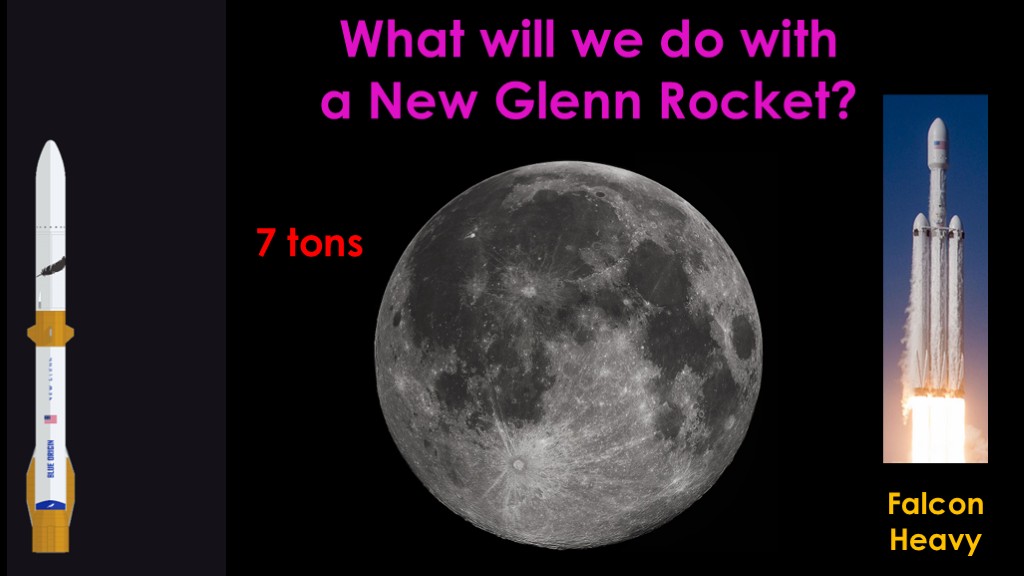
What will we do with a new glenn rocket?
The obvious answer is the moon.
Falcon heavy is a poor moon rocket because of the payload limitations and it's not a SpaceX's priority right now.
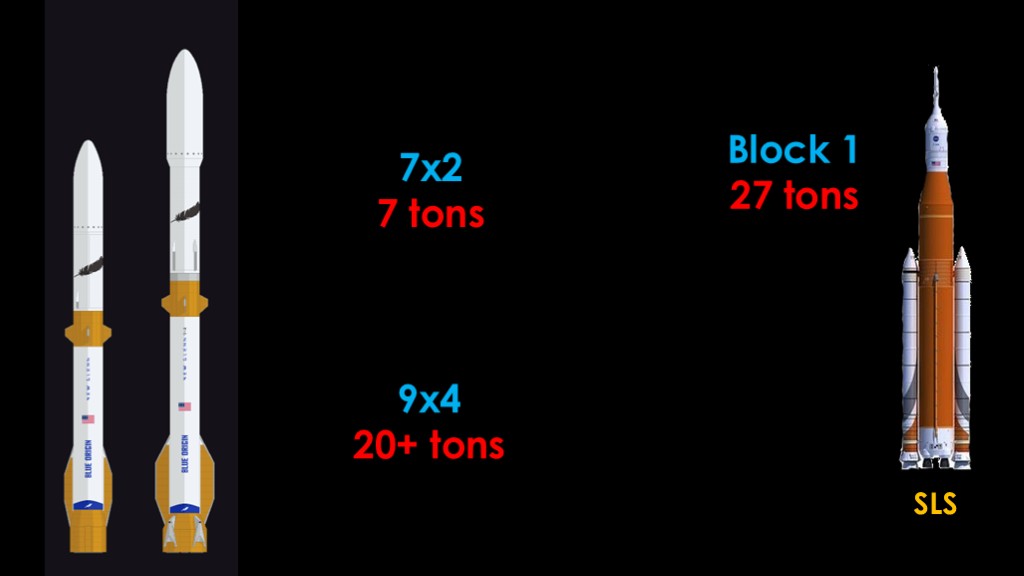
Unfortunately, New Glenn isn't a great moon rocket either - it can only send about 7 tons to the moon. It's too big for LEO, too small for most moon missions.
What you need is something beefier. More powerful engines, stretched first stage, and a second stage optimized for a moon rocket. That's the New New Glenn 9x4 with the 9x4 indicating the number of engines in each stage, and with the old one renamed to 7x2.
I'm going to try hard not to call them the 36 and the 14.
What about competition for these rockets?
I'm not the first to notice that the 20+ tons to the moon from the 9x4 variant is in the same ballpark as SLS block 1. It might be a little short of the performance required to carry Orion in a two-stage version, but there's likely either a kick stage or full third stage in the works that would address that - and coincidentally also address the need for a third stage to fly NSSL lane 2 missions at the same time.
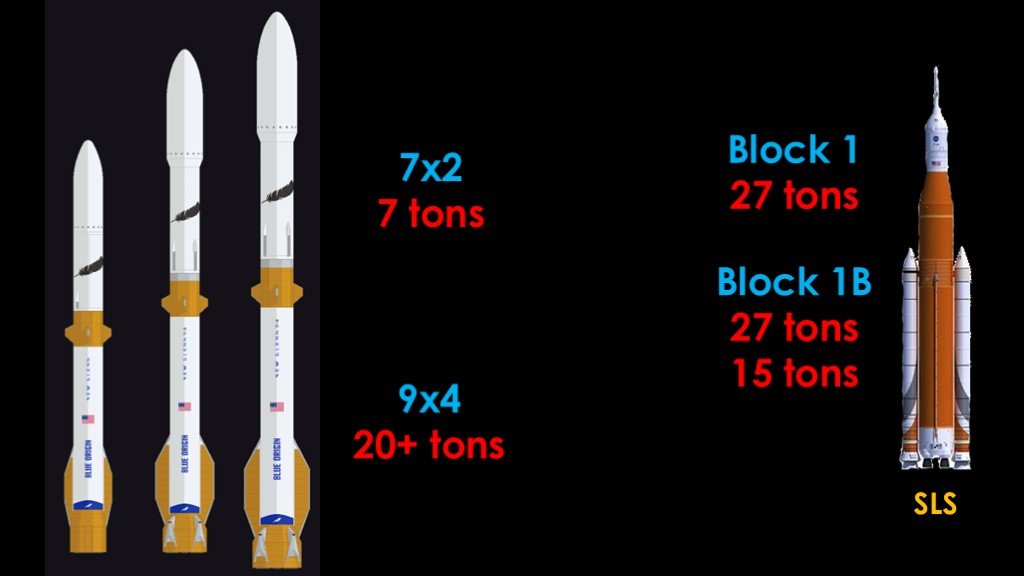
There is the SLS block 1b variant, which can carry Orion plus gateway payloads of about 15 tons. That would likely require two new glenn launches.
But is there anybody out there who thinks that a single SLS block 1B launch is going to cost more than two New Glenn launches. Blue Origin may not be the most competitive commercial company around, but it's going to be a lot cheaper than any SLS flight and - more importantly - much more likely to be able to launch more often than once every year - SLS's planned cadence - much less the current "once every 3 year" cadence.
And maybe there's a 12x5 variant in the works...
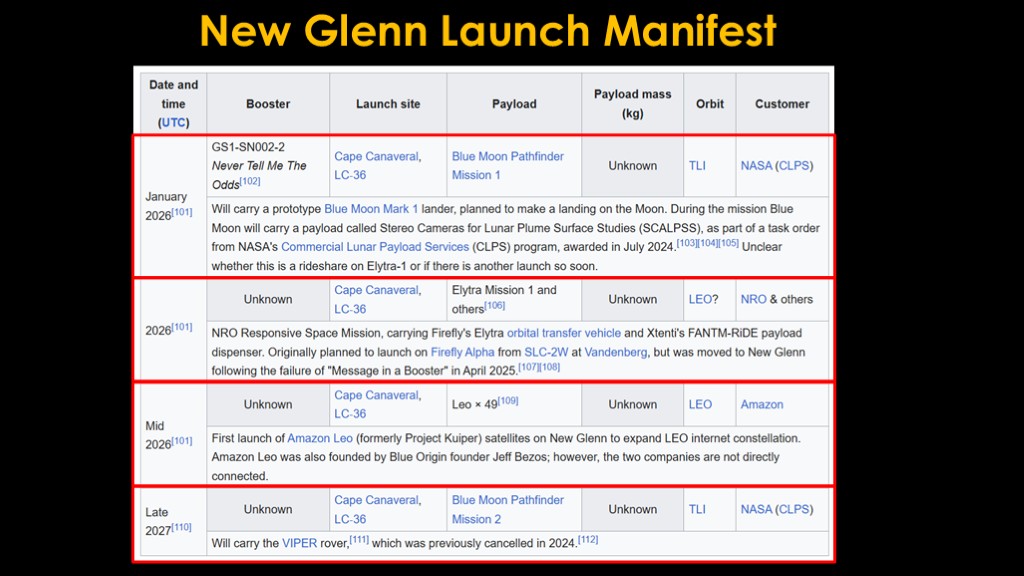
The possibility that Blue Origin has shifted towards a NSSL + Artemis strategy clears up a bit of a mystery for me.
New Glenn has 17 contracted flights for JeffLink plus options on 15 more, but when we look at the manifest for New Glenn we see one lonely constellation launch when I expected to see a bunch running off into the future.
We see one launch for NRO - a launch that Firefly Alpha was going to fly - which *might* count as a certification flight for NSSL launches (certification is really complicated as there are many different routes that you can take).
And then we see two launches for the Blue Moon Pathfinder.
Looking at this, you might almost think Blue cares more about the DoD and the moon than they care about constellation flight.
And think the answer is that they do.
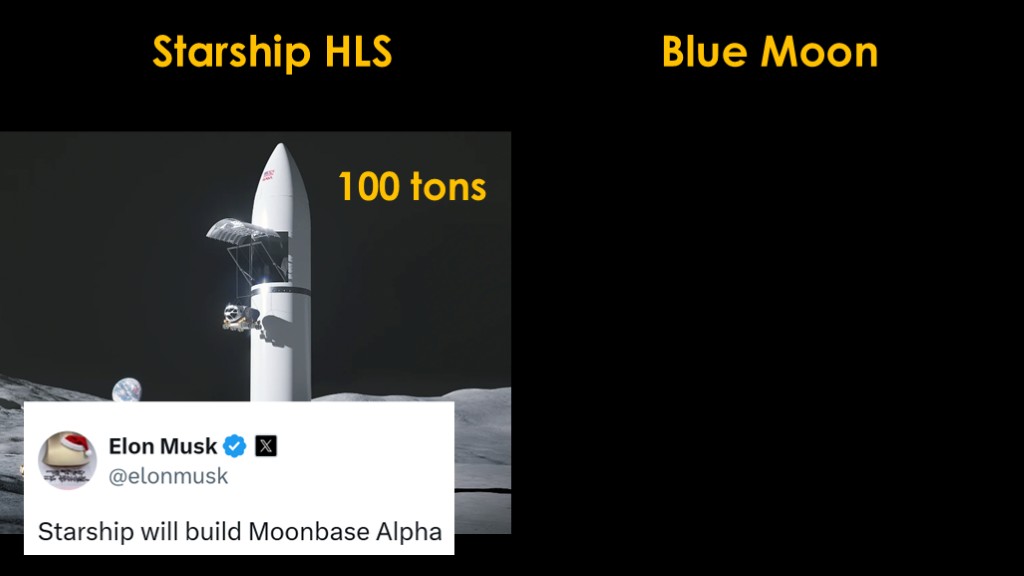
And I know that somebody is saying "What about Starship?"
It is true that Musk has said that starship will build moonbase alpha, a stronger commitment to the moon than we've heard about in the past.
The current aspirational payloads - and we should only treat them as that - put Starship at 100 tons to the lunar surface and Blue Moon at 30 tons. That would seem to make it hard for Blue Moon to compete.
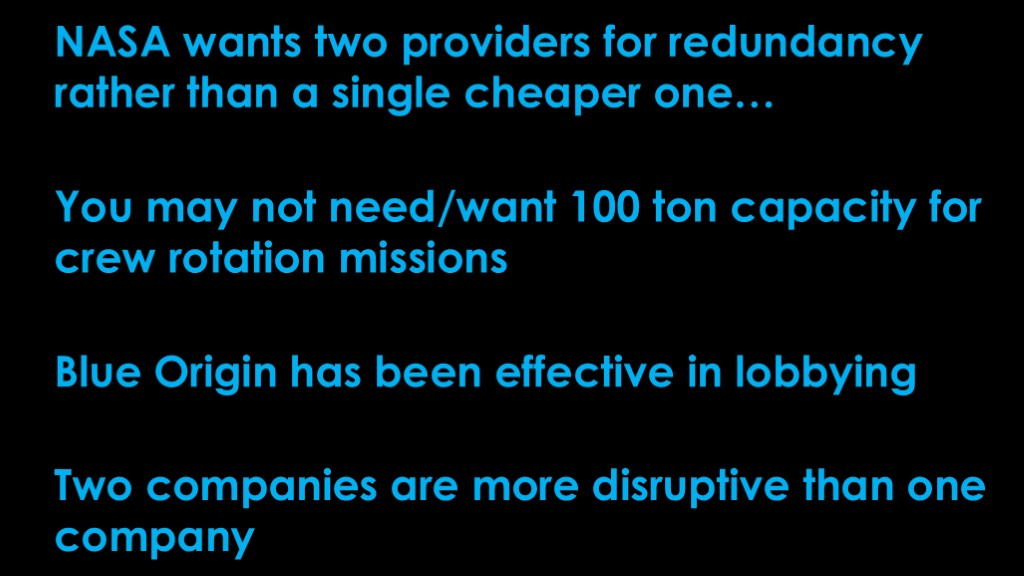
A few factors to keep in mind...
NASA wants two providers for redundancy rather than a single cheaper one...
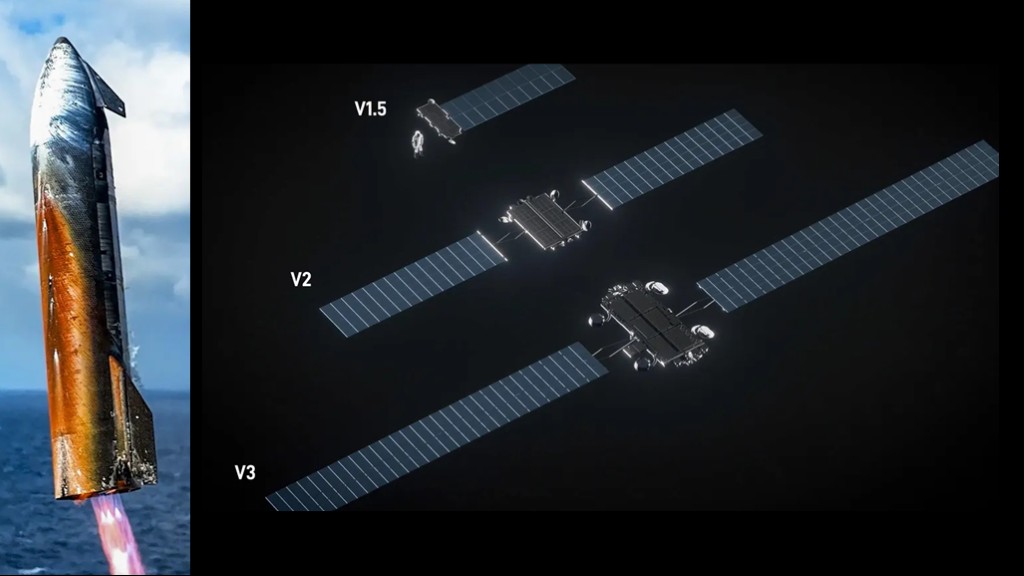
Further, SpaceX has some distractions...
The first is Starlink. SpaceX really wants to start launching the more capable V3 satellites. I think they care more about that right now than the moon.

Their goal is Mars, which - despite Musk's proclamations about the moon - is nearer and dearer to SpaceX.
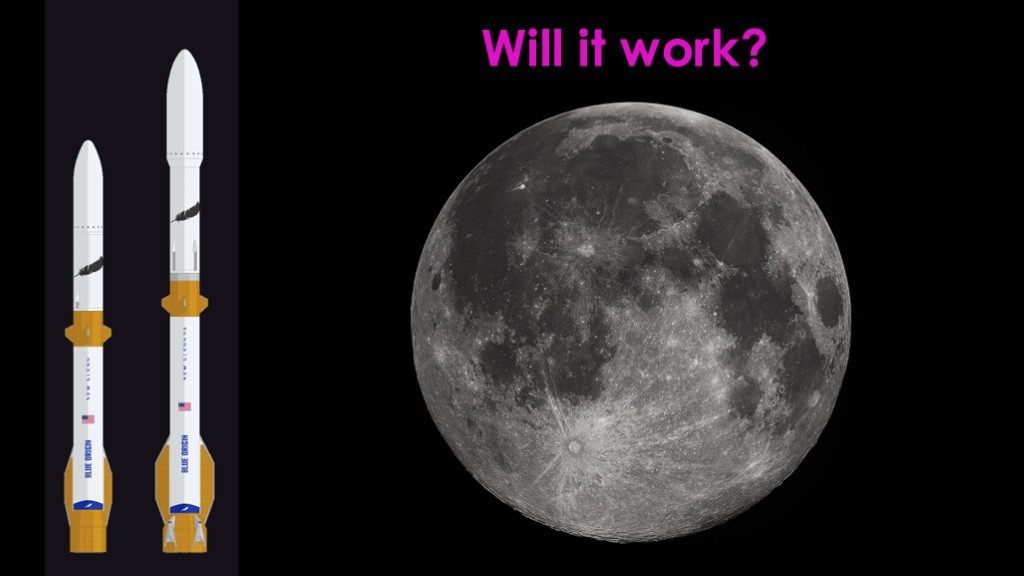
The $10 billion question is whether this strategy will work.
I think it's likely that Blue Origin can build the 9x4 version of New Glenn and fly it successfully.
It's not clear to me if they can ramp it up, though you might be able to do a decent lunar program with 4 to 8 launches a year, and that seems doable.
Will it be financially viable? I suspect the answer is "no" from a commercial perspective, but Blue may be able to charge NASA enough to make it a viable option - or at least an option where Bezos doesn't have to spend $5 billion a year bankrolling missions.
I've always been a blue origin skeptic in the past because I just didn't see a path to the kind of success they have talked about. Flying two missions and landing a booster helped a lot - I'm always looking for actual hardware completing missions - but even after that, I didn't see how they would get to commercial viability.
But pursuing a strategy focused on human lunar missions makes a lot of sense as a use for New Glenn.
Now they just need to execute...
That's all for this video.
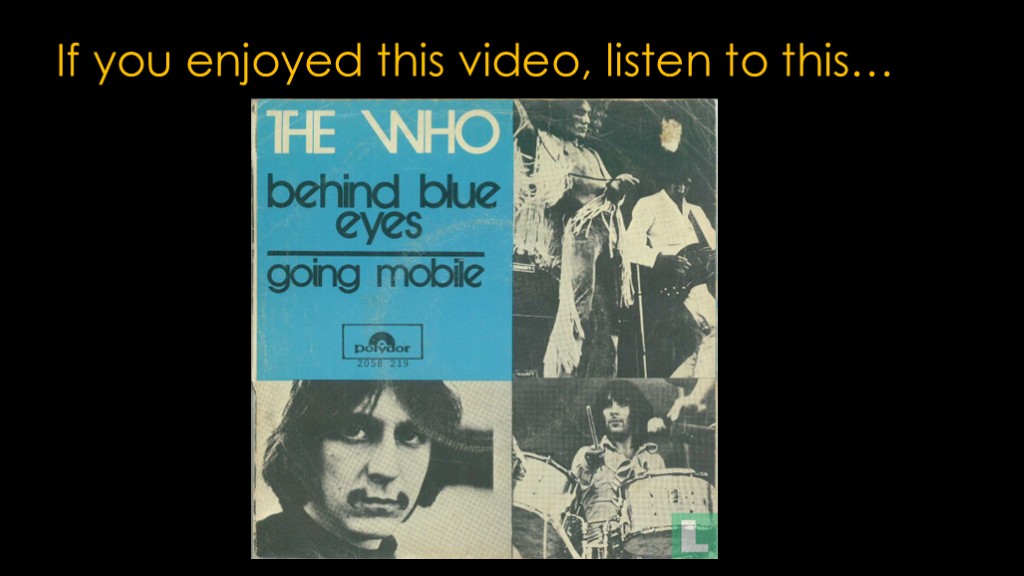
Your music selection for today is Pete Townsend's "Behind Blue Eyes" off The Who's triple platinum 1971 release, Who's Next.
https://www.youtube.com/watch?v=dMrImMedYRo